
Your Ordinary, Magnificent Yawn
An Ordinary Reflex, A Wider Exploration
All of us have particular ways of inhabiting our bodies, directing attention and meeting life—shaped, in part, by how much we sense and receive support, how readily we trust our own impulses and knowings, how we reach for what we want, and how we modulate energy and resource ourselves.
These questions are part of my life’s work, both as an ongoing personal inquiry and at the heart of my therapeutic work. It might sound strange that yawning has become one of the places I explore them, and that it has led me to develop a whole-body yawning practice, bringing together various threads that have occupied my attention.
But this isn’t about just any yawn—like the lopsided one you might throw away while typing at your computer, or the silent, stifled nostril yawn in your 4pm meeting. I’m offering a practice that begins with a yawn and opens into a much wider exploration field of exploration.
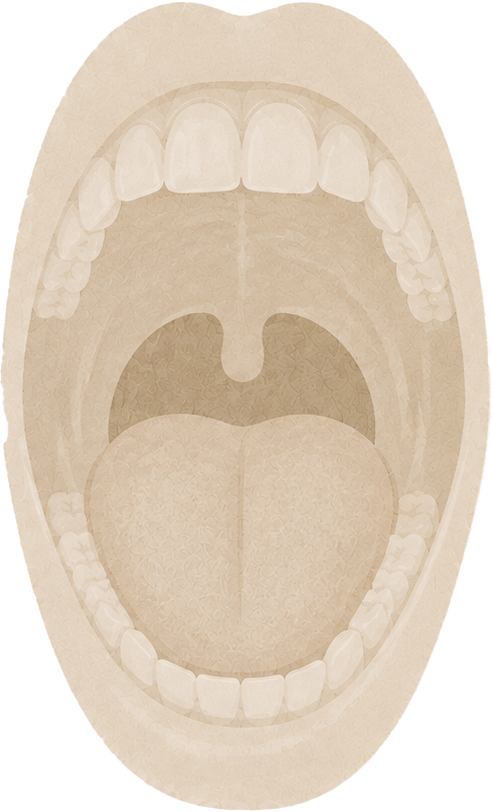
Following The Yawn
I first became interested in yawning way back in the early days of psychotherapy training, when I was required to have my own therapy. I’d be in the middle of a process, with things obviously still moving through, and find myself caught in a string of minuscule baby half-yawns. Most unsatisfying! Eventually came the big one—full, stretchy and gaping—and I knew I was through the other side, settling into some new embodied knowing or state. Over the years I looked for language to describe what was happening. I came to think of it as my nervous system stuck on a sympathetic track, wanting to change but not quite able to get there.
Now, twenty-five years later, I’m the therapist encouraging a yawn. I love it when clients yawn in a session. Although, many will excuse themselves, with a a sly hand to the mouth — an attempt to suppress a natural reflex, an organic process already underway.
In a therapeutic context, I understand the yawn as evidence that something may be shifting or releasing; perhaps the body is settling or moving back towards homeostasis. Equally, a yawn can be an attempt at self-soothing or a movement away from something uncomfortable or painful. Outside of therapy, yawning can accompany all kinds of shifts in state—bringing a little more alertness or energy when we’re tired or need to galvanise for what comes next, or helping us transition towards rest.
From Holding to Expression
I profess; I am a proud and vocal sigher. My mother has commented on how much I sigh, as if to say I find life (too) hard. But it’s not that at all (well, at least not always). I sigh because it feels good. It’s a built-in landing apparatus, company for my day. Breath coupled with sound becomes a way to stay connected, to feel and hear ourselves through resonance and vibration, and perhaps simply part of the body’s innate way of regulating and helping us meet what life asks of us.
A couple of years ago I did a psychedelic journey with Bufo. It was all tongue. My tongue in an unbelievable extension—a reach. I returned to something animal, reptilian and ancestral. Within this was a clear connection between my tongue, my heart and sound, alongside a huge cathartic release. Since then, I’ve become fascinated by the embryological relationships between the heart and the developing structures of the head, neck and throat—many of the same territories involved in yawning. It’s all connected!
After this journey, it became more apparent how reluctant so many clients are to use their voice, even a simple sigh, to help something move through. I’ve also found myself wondering about the relationship between bracing and yawning. It seems to me that people who show more signs of bracing and armouring in their bodies are less likely to yawn while processing, while others yawn voraciously through a session.
Tension, bracing and armouring are common hallmarks of trauma, but these kinds of bodily patterns can arise for other reasons. Stress, habit, social conditioning and unexpressed emotion can also shape the way we inhabit our bodies—and how our bodies take shape. We clench our jaws, tighten our throats, swallow words, suck in our bellies and grip our pelvic floors.
Contrast this with a full-bodied yawn: where the jaw opens, the throat widens, breath expands, the whole abdomen and pelvic floor respond, muscle tone shifts and space appears/ Often there is a sigh or sound and a new way of feeling ourselves.
Perhaps yawning offers a way to unwind some of these holding patterns—to open the body to more breath, sensation, movement and aliveness, and the possibility of organising itself differently.
When the Yawn Becomes a Practice
In the practice, this inquiry unfolds through touch, movement, sound and experiential anatomy. We get curious about the tongue, jaw, throat, face, head and neck—exploring the bones, muscles and tissues; what can soften or shift, and what becomes possible in breath, voice and expression.
We stay with the experience of the whole-body yawn—the pandiculation, the changes in tone and readiness, how we extend into space, and the vital art of returning to ourselves that both follows and precipitates our next reach. A dance of impulse and titration emerges, opening and gathering, reaching and returning. We amplify the yawn, play with it, allowing ourselves to tune into impulse and fall into movement. It becomes an improvisational score—at times theatrical, animal, organic.
Within all of this is our relationship with gravity: the ground beneath us, our ability to receive and leverage support, and to follow impulses that take us into movement and an exploration of the space around us. This includes the possibility of meeting others—and the vast sparkly world beyond.
One of the systems intimately involved in all of this is the vestibular system. Located in the inner ear, it senses gravity and the position and movement of our head, helping us balance and orient ourselves in space. People who have experienced childhood trauma often show differences in vestibular and sensory processing—perhaps unsurprising when trauma itself can profoundly disrupt our sense of safety, stability and orientation. Engaging the vestibular system can therefore offer another pathway into these territories: how we find support, organise ourselves in relation to gravity, orient our attention and move through the space around us with a greater sense of confidence, support and trust in our bodies.
These movements of opening and gathering, reaching and returning also take us into the territory of developmental movement—the early patterns of support, movement and exploration that helped shape how we inhabit ourselves and meet the world. By revisiting aspects of our development that may have been hurried, bypassed or not fully integrated, our movement becomes more varied and more responsive and new possibilities can emerge
A Space to Exhale
And when we practise together, something else happens: yawns, as you know, are irresistibly catchy! Soon we find ourselves in a sea of contagious yawns. I have come to see yawning as an access point—a springboard for exploration, movement potential and change. An ordinary, magnificent reflex that can open into something much larger: how we inhabit ourselves, how we meet gravity and the world around us, and the possibility of doing something anew.
And perhaps there is something simpler at the heart of it too: a space to exhale—literally—to soften, move, sound, stretch and feel more of ourselves; to luxuriate in the pleasure of attention and movement, just as we are, together with other humans.